

Filler Dissolving for New Injectors
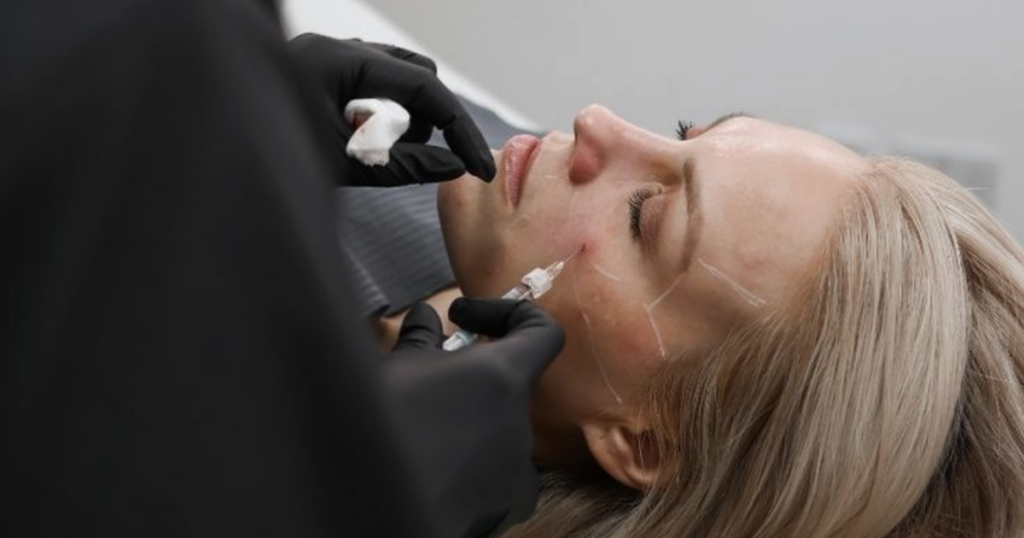
Medical aesthetics relies on judgment as much as technique. One of the most anxiety-inducing situations for new injectors involves reversing filler. Filler dissolving for new injectors often feels intimidating at first, and many people see it as a failure. Ethical, skilled injectors recognize a different truth: safely correcting or refining results demonstrates clinical responsibility, patient-centered care, and anatomical mastery.
At Aesthetic Pro Academy, we teach new injectors to approach filler reversal as a structured, safety-first process. Dissolving filler is a common, appropriate intervention, not only for emergencies, but for routine refinements. Lumps, bumps, asymmetry, overcorrection, migration, or patient preference may all justify the use of hyaluronidase. By framing filler reversal as part of standard practice, new injectors gain clarity, confidence, and ethical decision-making skills.
Assessment: Understanding Why You Are Dissolving
Before reaching for hyaluronidase, the injector must first identify the precise indication for reversal. Dissolving filler is not a cosmetic reset button; it is a clinical intervention. The underlying reason for dissolving determines the urgency, dosing strategy, tissue approach, and patient counseling.
Four primary categories guide this decision:
Lumps and Bumps
Superficial placement, uneven distribution, product accumulation, or delayed inflammatory reactions can create palpable or visible irregularities. Not every nodule requires full reversal. Some respond to massage, time, or conservative hyaluronidase dosing. The injector must distinguish between edema, inflammatory nodules, biofilm-related complications, and simple product malposition. Dissolving filler without accurate identification increases the risk of overcorrection and unnecessary tissue disruption.
Migration
True filler migration occurs when product moves beyond the intended anatomical compartment. This frequently appears in dynamic regions such as the lips or perioral area, where repetitive muscle movement gradually shifts hyaluronic acid into adjacent tissue planes. Proper assessment requires the injector to evaluate the original injection depth, product rheology, and local muscular forces. In many cases, migration calls for targeted, localized dissolution rather than flooding the entire area with enzyme.
Overfilled or Unwanted Filler
Overcorrection remains one of the most common reasons patients request elective dissolving. Patients may notice heaviness, distortion of natural contours, or facial imbalance. Others simply feel their appearance no longer reflects their identity. Although the indication may be aesthetic, the intervention still demands anatomical precision. The objective is refinement, not complete erasure. Strategic partial reversal often preserves structural support while restoring facial proportion.
Vascular Compromise
Vascular compromise represents the most urgent and non-negotiable indication for hyaluronidase. Signs of vascular occlusion, including blanching, livedo reticularis, severe pain, and delayed capillary refill require immediate recognition and decisive treatment. In this scenario, dissolving filler protects tissue rather than correcting aesthetics. The injector must understand vascular pathways, high-risk zones, and emergency dosing protocols. Hesitation or insufficient treatment can lead to tissue necrosis.
Injectors should never approach dissolving as a reactive or emotionally driven decision. Instead, they must rely on structured assessment, anatomical reasoning, and clearly defined treatment goals. When applied with clinical intention, hyaluronidase functions as a precise medical tool rather than a correction of regret.
Understanding Hyaluronidase
Hyaluronidase, commonly available as recombinant Hylenex, enzymatically breaks down hyaluronic acid and is the primary tool for reversing HA-based fillers. Its indications extend beyond migration or vascular compromise: addressing lumps, overfilling, uneven texture, patient dissatisfaction, or subtle refinements all fall within standard practice.
In emergencies, such as vascular compromise, hyaluronidase is urgent. Familiarity with published protocols, such as those from the National Library of Medicine, ensures timely and effective intervention.
New injectors also learn to evaluate cautionary contexts such as allergy history, relative contraindications, or unrealistic expectations, so that hyaluronidase is used as a precise, ethical clinical tool, not a cosmetic eraser. Filler Fundamentals and the Beginner Injectors Training Bundle cover these scenarios in depth, combining scientific principles with case-based learning, video demonstrations, and downloadable templates for real-world application.
Reconstitution and Dosing
Effective filler reversal begins before the needle ever touches tissue. Proper reconstitution of hyaluronidase ensures predictable enzymatic activity. Most commonly, 150-unit vials are reconstituted according to manufacturer guidelines to create a controlled, measurable concentration that allows for accurate dosing.
Dosing strategy must align with indication.
For elective aesthetic correction, such as lumps, migration, or overfilling hyaluronidase is administered conservatively and incrementally. Rather than relying on fixed numbers, many expert groups advocate a “treat to effect” approach, reassessing tissue response before repeating treatment. This reduces the risk of over-dissolution and preserves structural integrity.
In contrast, vascular compromise requires immediate, high-dose intervention guided by established emergency algorithms. Published protocols such as the ACE Group Vascular Occlusion Protocol and guidance from the Journal of Clinical and Aesthetic Dermatology recommend a high-dose, pulsed hyaluronidase strategy delivered throughout the affected vascular territory, with reassessment and repeat dosing as needed. In this setting, decisive action, not conservative titration, protects tissue viability.
Understanding when to titrate and when to flood the tissue is a matter of clinical judgment, not memorization.
Technique and Tissue Considerations
Safe, effective hyaluronidase administration requires attention to tissue planes, filler depth, and anatomical landmarks. Knowledge of vascular anatomy, regional tissue behavior, and product rheology informs where and how to deposit enzyme.
New injectors are encouraged to start conservatively, observe tissue response, and adapt technique as necessary. Understanding filler-tissue interactions allows for predictable outcomes and builds long-term confidence.
Our Aesthetic Residency provides the ideal next step, bridging classroom knowledge to real patients. Residents gain exposure to live cases, observe expert injectors, and receive hands-on mentorship. This experience helps new injectors refine clinical sequencing, complication management, and patient communication, making the transition from textbook learning to real-world competence seamless.
Patient Education and Follow-Up
Expectation management begins before hyaluronidase is ever injected. For elective dissolving, such as correction of lumps, migration, or overfilling, patients should be counseled on anticipated swelling, temporary asymmetry, and progressive enzymatic breakdown over 24–72 hours. Tissue may appear uneven before it appears improved.
Follow-up for non-emergent dissolving is typically scheduled at 1–2 weeks. This allows sufficient time for the inflammatory response to settle and for residual filler to declare itself. Additional dissolving should be conservative and indication-based, not reflexive.
Vascular compromise follow-up, however, operates on a completely different timeline.
When hyaluronidase is administered for suspected vascular occlusion, reassessment is immediate and ongoing. Capillary refill, skin color, temperature, and pain level must be monitored in real time during the appointment. Repeat high-dose pulsed administration may be required within the same visit if perfusion does not adequately improve.
After discharge, patients require close observation, often daily follow-up in the acute phase to evaluate for delayed ischemic changes, blistering, or tissue breakdown. Clear instructions regarding warning signs, direct contact access, and documentation protocols are essential. In cases of evolving necrosis, referral pathways and wound care management must already be in place before an emergency ever occurs.
Elective dissolving is a conversation. Vascular compromise is active medical management.
New injectors must learn both approaches. Guiding patients through emotionally sensitive aesthetic corrections builds trust and confidence. Managing vascular events with composure, structure, and protocol reinforces professional responsibility. Both are essential, but they require very different clinical mindsets.
Clinical Confidence Includes Correction
The most skilled injectors are not those who never correct, they are the ones who correct safely, calmly, and ethically. Migration, lumps, overcorrection, and patient dissatisfaction are all manageable with proper assessment, anatomical understanding, and adherence to protocol.
Ethical injectors integrate reversal seamlessly into their practice. Reversing filler is an exercise in clinical reasoning, patient advocacy, and precision, core competencies that define professional excellence in aesthetic medicine.
At Aesthetic Pro Academy, this competence is built intentionally through structured, safety-first learning. Our programs guide new injectors from foundational knowledge to real-world application
Structured Learning for New Injectors
Structured learning at Aesthetic Pro Academy ensures this competence is built intentionally. Courses like Filler Fundamentals and Botox Basics teach the anatomical and procedural foundations, the Beginner Injectors Training Bundle combines both for comprehensive mastery, and the Aesthetic Residency provides real patient exposure under expert supervision. Each step equips new injectors to act with confidence, make informed clinical decisions, and manage complications ethically.
Ready to elevate your practice and gain real-world confidence? Enroll today and start building the skills that set safe, ethical injectors apart.
start Training with aesthetic pro academy
Take the Next Step


Hide