

Facial Movement in Aesthetic Injectables
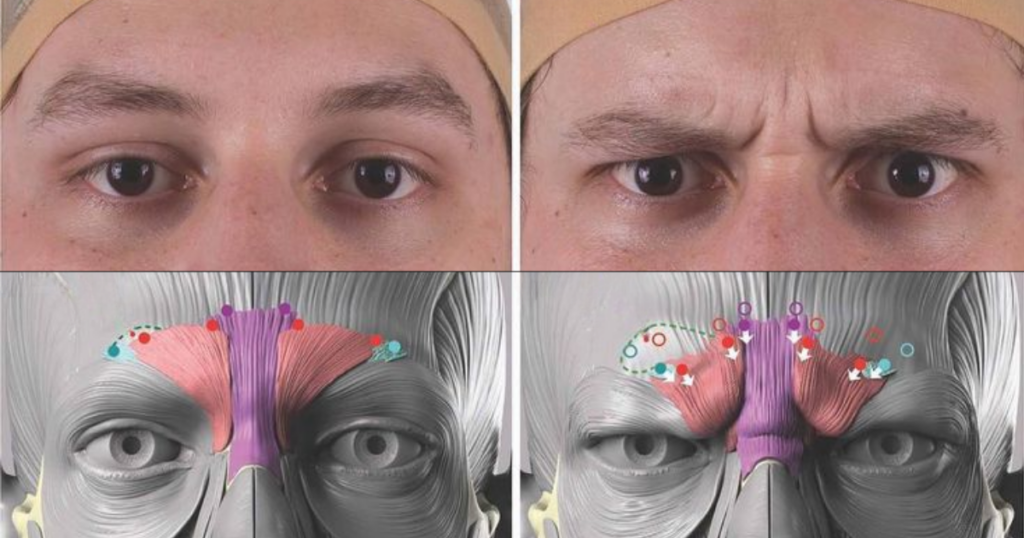
In aesthetic medicine, successful treatments require far more than memorizing injection points or following standardized protocols. The face is not a static structure. It functions as a dynamic system of muscles, fat compartments, ligaments, and skin that continuously interact during expression.
Every expression triggers muscle activity that shapes wrinkles and affects injectable behavior in facial movement in aesthetic injectables.
For new injectors, this concept forms a foundation. Many educational resources start with static anatomy, including illustrations of muscles, nerves, and fat compartments, but those diagrams show only one part of the clinical picture. In practice, injectors work with a face that constantly moves. Understanding how those movements shape wrinkle formation, influence tissue behavior, and interact with injectable products remains essential for delivering safe, natural-looking outcomes.
At Aesthetic Pro Academy, this concept is introduced early in both our Botox Basics and Filler Fundamentals training programs. Rather than teaching injectors to rely on rigid injection maps, our courses emphasize understanding why certain injection strategies work, beginning with careful observation of how the face moves during expression. Clinical observation of facial movement provides critical information about muscle activity, structural support, and the underlying causes of aesthetic concerns. Without this understanding, treatment plans risk becoming formulaic rather than individualized.
For injectors entering the field, learning to interpret facial movement is one of the first steps toward developing sound clinical judgment.
Static Anatomy and the Reality of a Moving Face
Aesthetic education typically begins with static anatomical study. Injectors learn where facial muscles sit, how fat compartments arrange, and how ligaments and bone provide structural support. This foundational knowledge helps injectors understand safe injection planes and avoid critical structures.
However, static anatomy shows only the face at rest. In reality, the face constantly shifts through dynamic muscle contraction and relaxation. These movements alter soft tissue position, temporarily change skin tension, and create folds that may become permanent lines over time in facial movement in aesthetic injectables.
This distinction between static and dynamic anatomy holds clinical importance. Static lines appear when the face rests and often reflect long-term structural changes in the skin. Dynamic lines, by contrast, appear during expression and result directly from muscle contraction. Most patients present a combination of both.
Understanding this relationship is central to how new injectors are trained at Aesthetic Pro Academy. Within our Beginner Injectors Training Bundle, injectors build foundational skills in both neuromodulators and dermal fillers, beginning with a strong understanding of static anatomy before progressing into dynamic facial assessment. This layered approach helps clinicians recognize how structural anatomy, muscle activity, and tissue movement work together to influence aging patterns and guide safe injectable treatment decisions.
For injectors, understanding this relationship helps clarify the true source of many aesthetic concerns. A wrinkle that appears static may still be driven primarily by repetitive muscular movement. Conversely, a fold that appears during expression may actually reflect deeper structural volume loss rather than muscle activity alone. Without observing how the face moves, it becomes difficult to determine which underlying mechanism is responsible.
Evaluating both static and dynamic anatomy allows injectors to move beyond treating surface-level wrinkles and instead address the structural and functional processes that create them.
Understanding Facial Muscle Activity
Facial muscles differ from most skeletal muscles in the body because they insert directly into the skin rather than attach bone to bone. This unique arrangement allows facial muscles to create subtle, highly expressive movements that communicate emotion and social cues. It also means muscle contraction directly affects skin folding and wrinkle formation in facial movement in aesthetic injectables.
The muscles of facial expression work in coordinated patterns. Some elevate facial structures, such as the frontalis lifting the brows, while others depress or pull inward. The balance between these opposing muscle groups maintains natural facial expression and symmetry.
For example, the muscles responsible for brow elevation and brow depression must remain in equilibrium for the upper face to function normally. When one group becomes dominant, asymmetry or exaggerated expression patterns can appear. These patterns often become visible during dynamic evaluation of the face.
Individual variation in muscle strength and movement patterns is significant. Some patients rely heavily on the frontalis muscle when expressing surprise or emphasis, producing strong horizontal forehead lines. Others demonstrate more prominent glabellar contraction, creating deep vertical frown lines during expression. These differences are rarely symmetrical, and subtle dominance of one side of the face often occurs.
Learning to recognize these patterns is a skill that develops through guided observation and repetition. Our Aesthetic Residency training options allow injectors to spend time observing consultations and live treatments specifically to study how muscle activity varies between patients. This exposure helps clinicians understand that real-world anatomy rarely follows textbook symmetry.
Observing these muscle activity patterns provides essential information about how neuromodulators should be used. It also helps explain why standardized injection maps cannot account for the variability seen in real patients. For new injectors, the habit of studying these patterns before treatment is one of the most valuable clinical skills to develop.
Facial Movement and Neurotoxin Treatment Strategy
Neuromodulators temporarily reduce muscle contraction. Because of this mechanism, injectors must understand which muscles create a patient’s dynamic lines and how strongly those muscles function.
Without careful movement assessment, injectors often fall into overly standardized treatment patterns. Many follow traditional injection maps while overlooking differences in muscle strength, brow position, and asymmetry. This approach may reduce wrinkles, but it can also disrupt the natural balance of facial movement.
In the Botox Basics course at Aesthetic Pro Academy, we emphasize this concept early in training. We train injectors to analyze muscle contraction during expression and use those patterns to guide toxin placement and dosing decisions, instead of relying on memorized injection sites.
The upper face illustrates this principle clearly. The frontalis elevates the brows and counteracts the downward pull of brow depressors. When injectors place toxin too aggressively across the frontalis without evaluating brow support or muscle strength, the brows can descend or feel heavy. In contrast, patients with strong frontalis activity often require more precise, targeted dosing to soften dynamic lines while preserving movement.
The glabellar complex offers another example. These muscles create the vertical frown lines commonly associated with stress or concentration. When injectors observe how a patient frowns, they can identify which muscles dominate the contraction pattern and how those muscles interact with surrounding structures.
Movement assessment directly guides both toxin placement and dose distribution. Instead of treating wrinkles alone, experienced injectors treat the underlying muscular behavior that creates them.
Facial Movement and Dermal Filler Decisions
Although dermal fillers are frequently associated with volume restoration, facial movement remains an important consideration when planning these treatments as well. The midface provides a clear example of how dynamic evaluation informs filler decisions.
During smiling or laughter, the cheeks elevate and shift across the zygomatic region. Observing how the tissue moves during these expressions can reveal early signs of structural aging. Subtle flattening of cheek projection, reduced elevation during smiling, or deepening shadows beneath the eyes may indicate volume loss within the midface fat compartments.
In our Filler Fundamentals course, injectors study how fat compartments, skeletal support, and ligament structures interact with facial movement. They use this understanding to determine whether a patient’s concerns stem from structural support changes rather than surface wrinkles alone.
When structural support declines, restoring volume within the midface can improve overall facial balance and indirectly soften areas like the nasolabial fold.
Facial movement also reveals how filler will behave after placement. Areas of frequent motion, especially around the mouth require products that integrate smoothly with dynamic tissue. Injectors must evaluate rheological properties and choose formulations that tolerate repeated movement without looking stiff or unnatural.
Dynamic assessment guides both where injectors place filler and which products they choose for treatment.
Tissue Behavior and the Importance of Restraint
Another reason movement assessment is so important in aesthetic medicine is that injectable treatments interact with living tissue rather than static structures. Skin elasticity, fat compartment mobility, and ligamentous support all influence how products settle and behave over time.
Injecting into tissue that is frequently compressed or stretched during facial movement requires a thoughtful approach. Overcorrection in these areas may initially appear acceptable at rest but become obvious during expression. For example, excessive filler placement in highly mobile regions of the lower face can disrupt natural movement patterns and draw attention to the treatment itself.
Similarly, excessive neuromodulator dosing can eliminate muscle activity to the point that facial expressions appear restricted. While some reduction in movement is expected, the goal of aesthetic treatment is typically to soften excessive contraction rather than eliminate it completely.
Throughout our educational programs at Aesthetic Pro Academy, we emphasize that restraint and patient safety must guide every injection decision. This principle is reinforced not only through didactic learning in our online courses but also through hands-on mentorship opportunities available through The Aesthetic Residency.
For new injectors, understanding tissue behavior is closely tied to learning restraint. Conservative dosing, careful product placement, and gradual treatment planning allow the injector to evaluate how tissues respond before pursuing additional correction.
Clinical Priorities for New Injectors
Clinicians entering aesthetic practice often feel overwhelmed by the number of variables involved in injectable treatments. Muscles, fat compartments, skin quality, product selection, and injection technique all influence outcomes and more importantly, how those outcomes behave in motion.
To manage this complexity, injectors must prioritize observation before intervention. When you study facial movement during consultation, you gain critical insight into both anatomy and how different products integrate within dynamic tissue. Product selection should go beyond indication or treatment area; it must reflect how the patient’s face moves. Choose more cohesive, flexible fillers for areas with high animation, and use firmer, more structural products where support matters most.
Strong decision-making starts with observation. When you understand how expressions influence tissue movement, you can select products that move with the face rather than against it, supporting natural, balanced outcomes.
This philosophy shapes how we train injectors at Aesthetic Pro Academy. We teach new injectors to slow down the assessment process, prioritize anatomical understanding, and approach product selection with the same level of intention as technique.
Early in training, injectors should focus on recognizing major muscle groups, identifying dynamic wrinkle patterns, and assessing how movement influences both placement and product behavior.
As injectors gain experience, they can begin to incorporate more advanced techniques, complex layering strategies, and nuanced product selection across multiple tissue planes, building skill and clinical judgment over time.
Developing a Thoughtful Approach to Aesthetic Medicine
Ultimately, the role of facial movement in injectable treatments extends beyond technical considerations. It reflects a broader philosophy of aesthetic practice. One that prioritizes careful observation, individualized planning, and respect for natural facial expression.
Patients rarely seek treatment because they want to eliminate movement entirely. More often, they want to look rested, balanced, and refreshed while maintaining the ability to express themselves naturally. Achieving this outcome requires injectors to understand not only where to place product, but also how that product will interact with the living, moving structures of the face.
At Aesthetic Pro Academy, our educational philosophy centers on building this type of clinical awareness. Through our online and in-person course options, injectors develop a deep understanding of anatomy, facial movement, tissue behavior, and safe injection technique. For those looking to further refine their skills, The Aesthetic Residency provides opportunities for mentorship, clinical observation, and hands-on training.
By strengthening these foundations, new injectors gain the tools needed to practice aesthetic medicine with confidence, precision, and respect for the complexity of the human face.
Tap down below to our training courses and begin building the clinical foundation you’ll need for safe, thoughtful aesthetic practice.
start Training with aesthetic pro academy
Take the Next Step


Hide