

Cannula Technique in the Lower Face for New Injectors
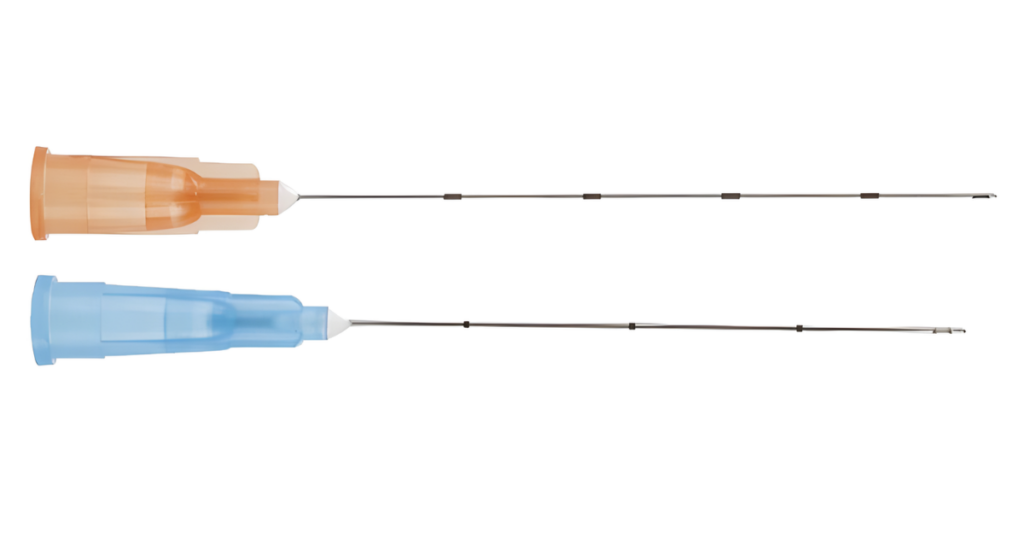
Cannula use in the lower face is valued for navigating tissue planes, reducing trauma, minimizing bruising, and improving product control. In appropriately selected patients and planes, the cannula can offer a distinct advantage over sharp instrumentation, particularly in structurally complex regions such as the jawline, marionette lines, and prejowl sulcus.
However, these benefits are entirely dependent on anatomical understanding. A cannula does not eliminate risk, it redistributes it. And when used without a clear grasp of tissue architecture, plane behavior, and vascular variability, the perceived safety advantage quickly diminishes.
In clinical practice, complications associated with cannula use in the lower face are rarely attributable to the instrument itself. More often, they reflect errors in plane selection, misinterpretation of tissue resistance, or incomplete treatment planning. The lower face is a region defined by layered soft tissue, ligamentous tension points, and variable vascular pathways. As a result, successful cannula technique in the lower face requires more than a change in tool, it requires a change in how the injector conceptualizes anatomy in motion.
At Aesthetic Pro Academy, this distinction is emphasized early within structured foundational education such as Filler Fundamentals, where injectors are taught to select technique based on anatomy and tissue behavior rather than preference or familiarity with a device. Cannula work in the lower face becomes less about substitution and more about strategic application within the correct clinical context.
Understanding Cannula as a Preferred Modality, Not a Default Choice
A cannula is a blunt-tipped instrument designed to traverse tissue planes rather than sharply penetrate them. This allows for broader distribution from a single entry point and, when used correctly, can reduce the likelihood of direct vascular puncture compared to sharp needles. These properties make it ideal for the lower face, where tissue planes and vascular structures closely intersect.
However, the classification of cannula as “safer” is only valid within a narrow set of conditions: correct plane selection, appropriate force modulation, and accurate interpretation of tissue feedback. Without these elements, the advantages are lost.
Cannulas can still enter vessels under pressure, particularly when advanced through fibrous or tethered tissue. They can also migrate between planes unintentionally, leading to superficial placement or uneven distribution. The blunt tip reduces but does not eliminate risk, it shifts the mechanism of injury from puncture to displacement, compression, or misplacement.
This principle is not developed through foundational instruction alone, but through advanced, hands-on training where injectors begin to interpret tissue behavior in real time. Linear threading, fanning, and controlled advancement adapt technique to resistance, depth feedback, and anatomical variability. This framework is essential in cannula-based work, where tactile interpretation becomes the primary determinant of accuracy.
At Aesthetic Pro Academy, this level of skill is developed through immersive clinical experiences such as The Aesthetic Residency, where injectors refine these techniques under guided supervision and real patient variability.
In the lower face, where multiple planes coexist within a compact anatomical space, this interpretive skill becomes critical. The cannula is only as controlled as the injector’s ability to read the tissue it is passing through.
Lower Face Anatomy: Structural Support and Dynamic Movement
The lower face is a region defined by structural support layered with constant motion. The mandible provides a fixed osseous foundation, while overlying fat compartments, retaining ligaments, and muscular activity determine contour and expression.
The mandibular retaining ligament serves as a key structural anchor, creating predictable points of fixation that influence how tissue responds to both volume loss and product placement. The prejowl and marionette regions are shaped by ligamentous tethering, fat descent, and muscle activity.
Vascular anatomy varies, with facial artery branches running along the mandible and toward the oral commissure at differing depths. These vessels are not consistently superficial or deep, they exist within a spectrum influenced by structural and temporal factors.
This is why integrated anatomical hands-on training, such as that provided in The Aesthetic Residency, is essential. Understanding fat, ligaments, vessels, and bone as one system helps predict cannula behavior within tissue.
Entry Points, Plane Integrity, and Cannula Navigation
Cannula technique in the lower face begins with entry point selection, but it is sustained by plane integrity. The entry site provides access, but it does not determine safety or outcome beyond the initial trajectory.
In practice, entry points are chosen to allow efficient access to the jawline or marionette regions, often from lateral or inferior positions depending on treatment goals. However, once inside tissue, the injector must continuously interpret plane changes rather than relying on a fixed pathway.
Two primary planes are typically utilized: a superficial subcutaneous plane for contour blending and a deeper supraperiosteal or deep fat plane for structural support. Each serves a distinct purpose, and confusion between them is a common source of inconsistent outcomes.
Cannulas frequently transition between planes unintentionally when encountering ligamentous resistance or variable tissue density. Without recognition of these shifts, product may be deposited in unintended layers, altering both aesthetic result and safety profile.
This level of control is not fully developed in didactic learning alone. Refined through clinical exposure and repetition, where injectors observe tissue behavior and adjust technique under supervised hands-on training.
Tissue Behavior and Product Integration
Cannula success in the lower face is ultimately determined by how well product integrates with tissue behavior. The jawline, for example, often presents with firmer structural resistance and clearer plane definition, while the marionette region is more mobile and influenced by dynamic muscular activity.
These differences directly impact how filler distributes after placement. A product placed too superficially in a mobile zone may become visible or migrate with expression. Conversely, deep placement without adequate structural support may fail to achieve lift or contour definition.
This is where rheology becomes clinically relevant. Within Filler Fundamentals, injectors learn how filler properties affect behavior across different tissue planes. Cannula technique cannot be separated from product science, each informs the other.
For new injectors, this is a critical developmental shift: technique does not create outcome in isolation. Outcome is the interaction between product, plane, and tissue behavior.
Safety Considerations in Cannula-Based Lower Face Injection
While cannulas reduce the risk of direct arterial puncture, they do not eliminate vascular events. Compression injury, intravascular displacement, and high-pressure bolus delivery remain clinically relevant risks, particularly in confined or fibrous tissue planes.
Safe cannula use requires controlled advancement with constant attention to resistance and patient feedback. Any unexpected change in tactile response should prompt immediate reassessment rather than continued progression.
Cannula safety relies less on aspiration and more on slow, low-pressure, continuous movement within defined anatomical planes. Complication recognition and management are not advanced topics, they are foundational clinical competencies. Within Filler Fundamentals, injectors are introduced early to vascular occlusion recognition, hyaluronidase protocols, and adverse event management to ensure that safety is embedded into decision-making from the beginning of training.
What to Prioritize and What to Delay
For new injectors, cannula technique in the lower face should not be approached as an entry-level skill. Although it is often perceived as simpler than sharp needle work, its clinical execution requires a more advanced understanding of plane navigation and tissue interpretation.
Early training should prioritize facial anatomy, plane recognition, and controlled injection in lower-complexity regions. This foundation is established through programs such as Filler Fundamentals, where injectors develop the ability to connect anatomy with technique before progressing into multi-plane cannula work.
Expansion into lower face cannula contouring should be gradual and ideally supported through supervised clinical experience. Hands-on training environments such as The Aesthetic Residency provide structured exposure to live patient anatomy, allowing injectors to refine cannula control under direct mentorship and real-time feedback.
Progression in aesthetic medicine is not defined by speed, but by stability of judgment.
Clinical Judgment and Ethical Application
Cannula use in the lower face reinforces a central principle in aesthetic medicine: safety is not defined by the instrument, but by the injector’s decision-making process. Selecting a cannula should always be based on anatomical indication, treatment goal, and clinical appropriateness, not perceived ease or default preference.
Ethical practice requires recognizing when restraint is more appropriate than intervention. The lower face often benefits from staged treatment approaches that respect tissue adaptation and structural limitation rather than immediate full correction.
Clinical maturity is reflected in the ability to modify, delay, or simplify treatment when anatomy or patient factors require it.
Mastering Cannula Technique in the Lower Face
Cannula technique in the lower face represents an evolution in injectable practice, from point-based delivery to plane-based navigation. It requires an integrated understanding of anatomy, tissue behavior, product science, and clinical judgment working simultaneously.
When grounded in proper training, cannula use can enhance precision, improve distribution, and support more refined aesthetic outcomes. Without that foundation, it introduces variability that is less visible, but clinically significant.
At Aesthetic Pro Academy, education is structured to develop this level of reasoning from the ground up. Foundational courses build anatomical fluency and technique selection, while advanced training and hands-on residency experiences focus on applying these principles in real clinical environments with supervision and feedback.
For injectors seeking to refine their approach to both needle and cannula techniques, continued structured education is essential.
Enroll at Aesthetic Pro Academy to develop the anatomical understanding, clinical judgment, and technical control required for safe and consistent lower face injecting. Tap down below to get started.
start Training with aesthetic pro academy
Take the Next Step


Hide