

Preventing Complications in Aesthetic Injecting
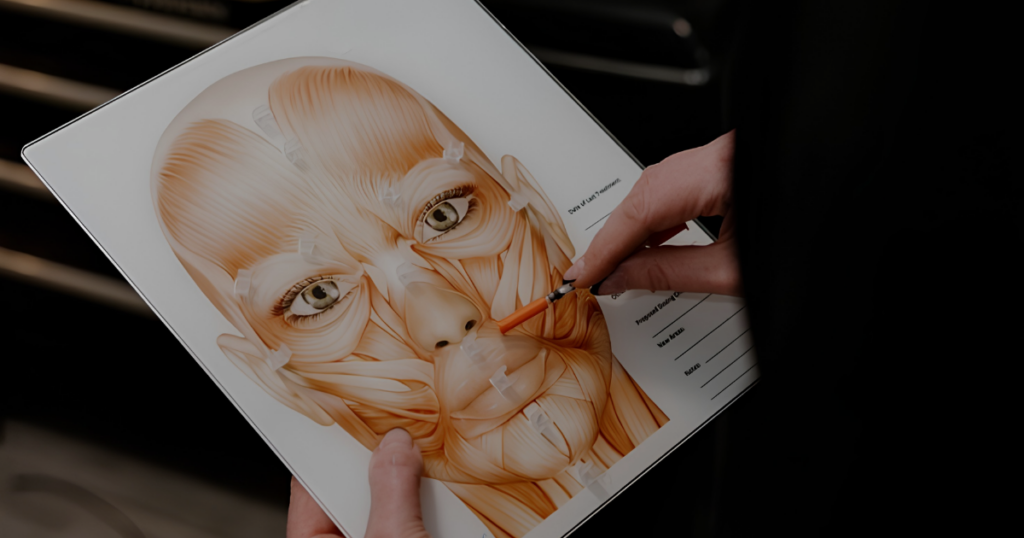
In aesthetic medicine, preventing complications in aesthetic injecting is often reduced to product choice or technical execution. While both matter, neither is the true foundation of safety. Most complications begin with small gaps in clinical judgment before and after injection.
For new injectors especially, this is an important reframing. Safety is not a moment, it is a continuum shaped by facial assessment, anatomical understanding, tissue behavior interpretation, and follow-up. When these layers are not aligned, even technically correct injections can produce unpredictable outcomes.
This is the clinical framework we build inside Aesthetic Pro Academy, and it is introduced early in our foundational training through Botox Basics, Filler Fundamentals, and our Beginner Injectors Bundle, where safety is not treated as an afterthought, but as the structure everything else is built on.
Facial Assessment as the First Layer of Complication Prevention
Before any product is drawn up, preventing complications in aesthetic injecting begins with assessing symmetry, movement patterns, volume distribution, skin quality, and structural support.
What is often missed at the beginner level is that assessment is not descriptive, it is predictive. The face in motion tells you more about risk than the face at rest. Subtle asymmetries in muscle recruitment, pre-existing volume deficits, or compensatory movement patterns can all influence how neurotoxins diffuse or how fillers integrate into tissue planes.
In Botox Basics, this concept is introduced through functional anatomy, understanding not just where muscles are, but how they behave dynamically. In Filler Fundamentals, that same principle extends into structural assessment, where volume loss patterns and compartmental anatomy guide placement decisions. Without this step being clinically sound, every downstream decision becomes less predictable.
Anatomy as a Living Clinical Map
Anatomy is not memorization in aesthetic medicine, it is navigation. It is the framework that determines safety zones, risk areas, and expected tissue behavior during and after injection.
Neurotoxins require a precise understanding of muscular anatomy, including origin, insertion, depth, and interaction with adjacent structures. Dermal fillers add another layer of complexity, involving vascular pathways, fat compartments, and fascial planes that determine both aesthetic outcome and complication risk.
The challenge for new injectors is not access to anatomical information, it is integration of that information into real-time decision-making. This is why anatomy is taught progressively across both Botox Basics and Filler Fundamentals, not as isolated content, but as a clinical language that directly informs injection strategy.
When anatomy is fully integrated, injectors begin to anticipate tissue response rather than simply react to it. This shift is what reduces variability and improves safety across all treatment areas.
Identifying Early Adverse Reactions in Real Time
Even with strong assessment and anatomy, adverse reactions can still occur. What defines clinical competence is not avoidance alone, but recognition, specifically early recognition.
In filler treatments, early warning signs may include disproportionate pain, subtle changes in skin color, or early alterations in perfusion that do not yet appear severe. These signs often precede more obvious vascular compromise and require immediate clinical attention.
In neurotoxin treatments, early concerns are more delayed and functional. Subtle asymmetry in movement patterns or unexpected muscle weakening in adjacent areas may indicate diffusion patterns that require clinical reassessment.
What makes this challenging for new injectors is that early signs are rarely dramatic. They are deviations from expected tissue behavior, not obvious complications. This is why Filler Fundamentals emphasizes vascular awareness and tissue response, while Botox Basics focuses on diffusion behavior and neuromuscular interpretation.
Across both modalities, the principle remains the same. Tissue always changes before complication becomes visually obvious.
Building Confidence Through Clinical Training
Preventing complications in aesthetic injecting extends beyond prevention alone. Even skilled injectors must recognize, assess, and treat unexpected tissue responses when complications occur. Safe practice is not defined by avoiding every complication, but by recognizing changes early, understanding what they mean clinically, and responding appropriately.
Treatment begins with identification. Injectors must learn to distinguish expected post-treatment responses from evolving complications, whether that involves prolonged swelling, asymmetry, delayed-onset nodules, inflammatory reactions, or early signs of vascular compromise. The ability to recognize subtle tissue changes and understand when intervention is necessary directly impacts patient outcomes and safety.
Within our educational pathways, complication training is treated as a core clinical skill rather than an isolated topic. Both Botox Basics and Filler Fundamentals include dedicated Managing Complications & Follow-Up Care modules focused on identifying adverse reactions, understanding emergency considerations, post-treatment management, and clinical decision-making. In Filler Fundamentals, students work through treatment considerations for bruising, nodules, and vascular occlusion, supported by scientific literature on acute arterial occlusion, delayed-onset nodules, hyaluronidase use, and anaphylaxis recognition and management.
Beyond theory, students move into training videos and case-based learning designed to mirror real clinical scenarios. Through practical demonstrations and guided case studies involving lip filler, cheek filler, and upper and lower facial neurotoxin treatments, students learn how to recognize patterns, identify common complications, and think through corrective or treatment pathways in real time.
Within the Beginner Injectors Training Bundle, these modules are combined into a more comprehensive learning experience. The goal is not simply teaching new injectors what complications look like; it is developing injectors who understand why they happen, how to intervene appropriately, and how to build the clinical judgment necessary to navigate unexpected outcomes with confidence.
What New Injectors Should Prioritize and What Should Be Delayed
For early-career injectors, complication prevention is not about mastering every technique quickly. It is about building clinical stability before expanding complexity.
Facial assessment, anatomical fluency, and tissue interpretation should come before advanced techniques or high-risk zones. Without these foundations, technique becomes disconnected from clinical reasoning, increasing variability in outcomes.
This is why Aesthetic Pro Academy structures education progressively. Botox Basics builds neuromuscular understanding and diffusion awareness. Filler Fundamentals builds structural and vascular literacy. The Beginner Injectors Bundle connects these principles into a unified clinical framework for safe early practice. Advancement in aesthetics should be based on judgment, not speed.
Building Clinically Safe Injectors Through Structured Education
Complication prevention is not a single skill, it’s a clinical framework that integrates anatomy, assessment, tissue behavior, and follow-up into every decision made before, during, and after treatment. At Aesthetic Pro Academy, this framework is the foundation of how we train injectors. We teach not only how to inject, but how to think clinically, how to recognize risk early, interpret tissue response accurately, and make ethical, anatomy-driven decisions in real time.
Because in aesthetic medicine, safety is not defined by reaction. It is defined by recognition, judgment, and restraint applied long before intervention is required.
If you are ready to build a stronger clinical foundation and develop true confidence in safe, anatomy-first injecting, enroll in Aesthetic Pro Academy and begin your training with intention. Tap down below to get started.
start Training with aesthetic pro academy
Take the Next Step


Hide