

Nobody Told Me I’d Spend More Time Consulting Than Injecting
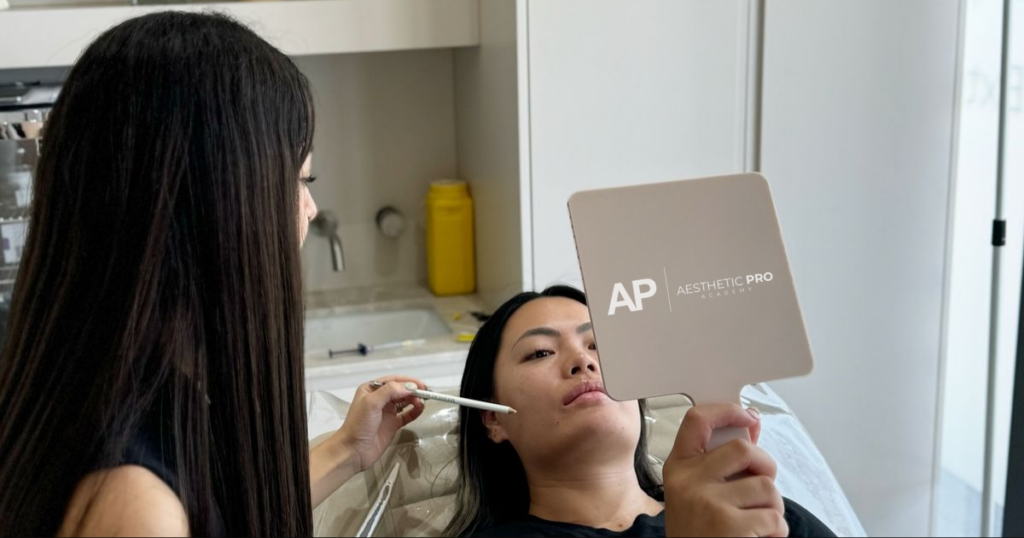
What I wish I understood about the consultation before I started injecting. – Our Founders Perspective
When most people picture the life of an aesthetic injector, they probably picture the part that brought them there in the first place: the syringe.
The injection.
The transformation.
The before-and-after.
That was how I pictured it, too.
When I first started injecting, I was focused on learning the technical side of the job. I wanted to understand anatomy, master my injection techniques, learn my products, and feel confident with a syringe in my hand.
What I didn’t realize was how much of my time would actually be spent before I ever picked one up. Because the more experience I gained, the more I realized something:
The injection is only one part of the job. The consultation is where the real work begins.
It’s where you figure out what your patient actually wants. It’s where you determine what’s causing the concern they’re describing. It’s where you decide whether they’re an appropriate candidate, establish realistic expectations, build a treatment plan, and sometimes make the decision that the best treatment is no treatment at all.
And honestly? I wish someone had told me that sooner.
Why New Injectors Focus So Much on the Injection
When you’re new to aesthetics, it’s easy to become obsessed with the technical side of injecting. And understandably so.
You have anatomy to learn. Products to understand. Injection depths, planes, vectors, techniques, complications, and so many small details that can make the learning curve feel enormous.
And in many beginner injector courses, technique becomes the primary focus. You spend hours learning injection points, watching demonstrations, practicing hand positioning, and studying different approaches to placing the product.
Those skills are important. You absolutely need to know how to inject safely and effectively. But there’s often far less emphasis on what happens before the syringe ever comes out.
Then there’s social media. Everywhere you look, there’s another injection video, another technique, another before-and-after, another injector showing you exactly where they placed their needle.
It can make aesthetics feel like the goal is simply to learn how to inject.
But knowing where to put a needle doesn’t tell you whether you should put it there. That’s a completely different skill.
A technically beautiful injection can still be the wrong treatment for the patient sitting in front of you. You can execute a technique perfectly and still miss the bigger picture if you haven’t properly understood the patient’s goals, assessed their anatomy, identified the cause of their concern, or considered whether that treatment is actually the best option.
And that’s why consultation skills matter so much.
Learning to inject is only one part of becoming an injector. Learning how to think before you inject is what allows you to use that technical skill appropriately.
The Consultation Is the Real Procedure
Before you ever inject, you’re making decisions that will ultimately determine the outcome.
What is the patient actually concerned about?
What is causing what they’re seeing?
What can realistically be improved?
What should be treated first?
What shouldn’t be treated at all?
Those decisions don’t happen when you’re holding the syringe. They happen during the consultation.
A strong consultation allows you to move beyond treating the feature a patient points to and start understanding the face as a whole.
A patient might come in asking for lip filler because they feel like their lips are getting thinner. But is volume actually the primary issue? Is there surrounding structural change? Are they looking for more definition, projection, or simply a subtle restoration?
Another patient might point to a nasolabial fold and ask for filler directly into the fold. But what is actually contributing to the appearance of that fold?
The patient identifies the concern. Your job is to identify the cause.
That’s where clinical judgment comes in. And it’s something you can’t learn from memorizing injection points alone.
What Every Consultation Should Include
There isn’t one perfect script for every patient, but there should be a framework behind every consultation.
At a minimum, you’re working through several key areas:
Patient Goals
Understand why they’re there, what they’re hoping to change, what matters most to them, and what kind of result they’re envisioning.
Medical History + Safety
Review relevant medical history, medications, allergies, previous treatments, contraindications, and anything else that could affect whether or how you proceed.
Facial Assessment
Look beyond the feature they’re pointing to. Evaluate facial balance, movement, volume, skin quality, symmetry, structure, and the underlying factors contributing to their concerns.
Treatment Planning
Prioritize. You don’t need to address everything in one appointment. Build a plan around their anatomy, goals, timeline, and budget.
Education
Make sure your patient understands what you’re recommending, why you’re recommending it, what it can realistically accomplish, and what to expect afterward.
Documentation
Photographs, consent, treatment details, products, lot numbers, injection sites, patient tolerance, and follow-up all become part of the clinical picture.
None of these steps are particularly glamorous. But they’re the things that make good aesthetic medicine possible.
Why New Injectors Feel Overwhelmed by Consultations
This is one of the things I wish more new injectors understood:
Feeling overwhelmed during consultations doesn’t mean you’re bad at this. There’s a lot to remember.
You’re trying to have a natural conversation while gathering a medical history, understanding the patient’s goals, assessing their face, identifying contraindications, developing a treatment plan, educating them, answering questions, and making sure you’re documenting everything correctly.
And when you’re new, it can feel like you’re trying to remember a checklist in your head while simultaneously trying to appear confident.
Did I ask about their medications?
Did I ask about previous filler?
Did I actually understand what they want?
Did I assess the whole face?
Did I explain the risks?
Did I talk about what we shouldn’t treat today?
Did I miss something?
I’ve learned that confidence doesn’t come from trying to remember everything at once. It comes from having a framework you can rely on.
And that’s exactly why I created the resource below.
Meet The New Injector Consultation Blueprint™ And Pocket Guide
Knowing what a great consultation should look like is one thing. Knowing how to consistently put that into practice is another. That’s why I created two free resources to help you build confidence in your consultation process.
The New Injector Consultation Blueprint™
The Blueprint is your downloadable guide to learning and understanding the consultation process. Use it as a study resource as you build your knowledge, refine your approach, and develop a consultation flow that feels natural and intentional.
Inside, you’ll learn how to:
✓ Prepare before the patient arrives
✓ Build rapport and uncover patient goals
✓ Perform a full-face clinical assessment
✓ Develop a thoughtful treatment plan
✓ Educate patients and manage expectations
✓ Prepare for treatment
✓ Complete post-treatment documentation
✓ Keep your decision-making patient-centered
You’ll also find clinical pearls throughout like “What’s causing the concern?” to help you slow down, think critically, and assess before jumping straight to treatment.
The New Injector Consultation Blueprint™ Pocket Guide
Once you’ve learned the framework, the Pocket Guide gives you a quick-reference version you can download, print, and keep with you during your consultations.
Think of it as your consultation checklist, a simple way to make sure you’ve covered the important steps from start to finish without relying on memory alone.
Use it to quickly check:
✓ Patient history + safety
✓ Goals + expectations
✓ Facial assessment
✓ Treatment planning
✓ Patient education
✓ Pre-treatment preparation
✓ Post-treatment documentation
The Blueprint helps you learn the process. The Pocket Guide helps you put it into practice. Neither is meant to turn your consultations into scripted conversations. They’re tools to help you build a strong foundation until these steps become second nature.
The Syringe Comes Last
Every injector eventually learns that the consultation isn’t something you do before the treatment. It is the foundation of the treatment.
The syringe simply carries out the plan you’ve already built.
The more experience I gain, the more I believe that some of the most important decisions I make as an injector happen before I ever touch a patient with a needle.
It’s choosing to listen instead of assuming. It’s recognizing when the patient’s concern isn’t actually caused by the feature they’re pointing to.
It’s knowing when to treat, when to wait, and when to say “not today.” And it’s understanding that a successful outcome isn’t just about how well you inject.
It’s about how thoughtfully you planned the treatment in the first place.
If you’re a new injector, don’t put all of your energy into learning what to do with the syringe. Learn how to think before you pick it up.
Want to start consulting like an experienced injector?
Download the free New Injector Consultation Blueprint™ and Pocket Guide, the exact consultation framework I wish I’d had when I started in aesthetics.
start Training with aesthetic pro academy
Take the Next Step


Hide