

Masseter neurotoxin treatment for TMJ
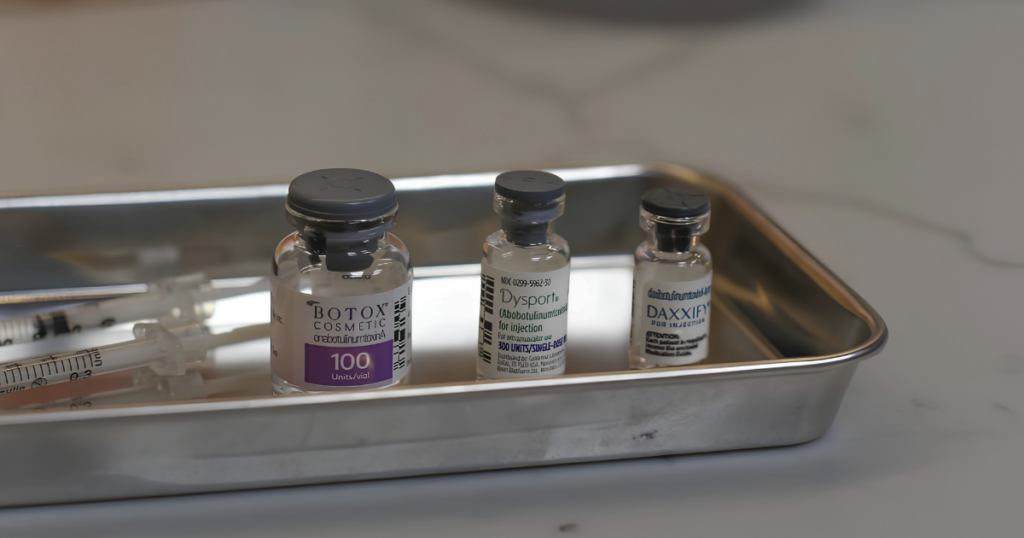
Masseter neurotoxin treatment for TMJ and jaw slimming is often introduced to new injectors as a cosmetic approach for lower facial slimming. In clinical practice, however, it quickly becomes clear that this indication is fundamentally rooted in function rather than aesthetics alone. The masseter plays a central role in mastication, occlusal force generation, and temporomandibular joint (TMJ) stability, making it one of the most behavior-dependent muscles in the lower face.
For new injectors, variability in outcomes is rarely due to product performance. It more often reflects gaps in understanding muscle function, baseline hypertrophy, and patient-specific movement patterns. When the masseter is treated without full appreciation of its functional role, results can become inconsistent, both aesthetically and therapeutically.
This is why masseter toxin should not be viewed as a routine aesthetic injection. It should be approached as a foundational opportunity to understand functional anatomy, neuromuscular balance, and treatment planning in a dynamic muscle system.
This level of understanding begins in structured education. Within a curriculum such as Botox Basics at Aesthetic Pro Academy, injectors are first introduced to neuromodulator mechanism of action, facial anatomy, and dosing principles in a way that connects directly to functional and aesthetic applications. Without this foundation, masseter treatment becomes pattern-based rather than reasoning-based, and outcomes remain less predictable.
TMJ Function as a Neuromodulator Indication
Unlike superficial aesthetic applications of neurotoxin, masseter treatment often intersects with TMJ-related dysfunction. The temporomandibular joint operates within a complex system of muscles including the masseter, temporalis, and medial pterygoid, all contributing to mandibular movement and occlusal force.
In cases of parafunctional activity such as clenching or bruxism, sustained muscle contraction leads to hypertrophy and increased resting tone. Patients may present with jaw tension, headaches, facial fatigue, or morning soreness in addition to visible changes in lower facial width.
Neurotoxin works by inhibiting acetylcholine release at the neuromuscular junction, reducing excessive muscle contraction over time. In the masseter, this results in decreased hyperactivity and gradual reduction in hypertrophic stimulus.
This distinction is critical. The goal is not simply facial slimming, it is modulation of overactive muscle function while preserving essential masticatory strength.
Anatomical Considerations of the Masseter and Lower Face
The masseter is a thick, multilayered muscle originating from the zygomatic arch and inserting along the mandibular ramus and angle. Its structure varies significantly between patients based on genetics, habitual function, and bite mechanics.
Unlike more uniform treatment areas, the masseter is highly variable in both thickness and functional contribution. Some patients present with true muscular hypertrophy, while others exhibit skeletal width that is not significantly influenced by muscle volume.
For new injectors, this distinction is essential. Treating all lower facial width as masseter-driven can lead to underwhelming aesthetic change or inappropriate dosing strategies.
Assessment must include palpation during contraction, evaluation of hypertrophy patterns, and recognition of unilateral versus bilateral dominance. Treatment planning should always reflect functional contribution, not visual assumption alone.
These foundational principles of masseter anatomy and treatment planning are discussed in the Botox Basics course, where injectors learn to connect neuromuscular anatomy, dosing logic, and functional assessment before progressing into live clinical application.
Without this baseline understanding, masseter treatment becomes pattern-based rather than anatomically driven, increasing variability in both aesthetic and functional outcomes.
Injection Strategy and Functional Modulation
Effective masseter treatment requires precise identification of the hypertrophic zone, typically concentrated in the posterior and inferior portions of the muscle. However, injection strategy must be individualized based on muscle bulk, asymmetry, and functional demand.
Dosing should reflect both aesthetic and functional intent. Over-reduction can lead to chewing weakness, altered smile dynamics, or compensatory activity in adjacent muscles such as the temporalis.
This is where early injector development becomes critical. While foundational training introduces generalized dosing ranges, true clinical consistency comes from adapting technique to muscle strength and patient function rather than relying solely on static protocols.
These principles of technique, strategy, and dosing logic are built in the Botox Basics course, where injectors learn how to translate neuromuscular anatomy into structured injection planning and safe dosing frameworks.
However, understanding technique conceptually is only the first step. In hands-on environments such as The Aesthetic Residency, injectors begin to apply these principles in real clinical settings through supervised treatment planning, live patient variability, and guided refinement of injection technique based on real-time anatomical feedback.
Tissue Behavior, Muscle Adaptation, and Treatment Response
The masseter does not respond uniformly to neurotoxin. Muscle thickness, baseline activity, and functional habits all influence both onset and degree of reduction.
In patients with strong hypertrophy and high-frequency clenching, visible contour change may be more pronounced and predictable. In patients with minimal hypertrophy but perceived facial width, outcomes may be subtle or primarily functional rather than aesthetic.
Muscle adaptation occurs gradually over repeated treatment cycles. Initial sessions often focus on modulation of activity rather than dramatic structural change. Over time, decreased functional load contributes to visible reduction in bulk.
Understanding this progression is essential. Outcomes should not be judged prematurely, as full remodeling requires time and repeated neuromuscular modulation.
Safety, Function, and Clinical Responsibility
While masseter treatment is considered relatively safe when performed correctly, it carries unique functional considerations. Over-treatment can lead to compromised chewing strength, altered lower facial support, and unwanted hollowing in patients with minimal baseline muscle volume.
Preserving function is a key responsibility of the injector. The goal is not maximal reduction, it is controlled modulation of hyperactivity.
This requires restraint, especially in early practice. Expanding into functional indications without strong anatomical understanding increases variability across all neuromodulator treatments.
Competence is not defined by how many areas are treated, but by how consistently outcomes are achieved with respect for anatomy and function.
What New Injectors Should Prioritize
Early masseter treatments should be used to build foundational clinical skills: accurate muscle identification, consistent dosing strategy, and the ability to distinguish functional hypertrophy from structural facial width.
Variability in outcomes should be treated as clinical data. Asymmetry, under-response, or overcorrection often reflect gaps in assessment or dosing strategy rather than product failure. Learning to interpret these outcomes is essential for developing clinical judgment.
Mastery in this area establishes a framework for all future neuromodulator work, particularly in dynamic and functionally complex regions of the face.
Advancing Clinical Skill Through Structured Education
Successful masseter treatment requires more than familiarity with neurotoxin. It requires integration of anatomy, muscle physiology, and functional assessment into a cohesive treatment strategy.
At Aesthetic Pro Academy, this progression is intentional. Botox Basics establishes foundational knowledge in neuromodulator science, facial anatomy, and dosing principles, helping new injectors develop early clinical reasoning rather than memorized technique.
From there, The Aesthetic Residency provides hands-on training in real clinical environments, where injectors learn to assess muscle function, adapt dosing strategies, and refine technique under expert supervision.
Together, these pathways reflect a core principle of aesthetic medicine: clinical consistency is not built through repetition alone, but through understanding how and why each treatment works.
For injectors ready to deepen their clinical foundation and advance toward functional, anatomy-driven practice, structured education is the next step. Explore upcoming trainings at Aesthetic Pro Academy and continue building toward intentional, confident injecting.
start Training with aesthetic pro academy
Take the Next Step


Hide