

Beginner Lip Filler Considerations
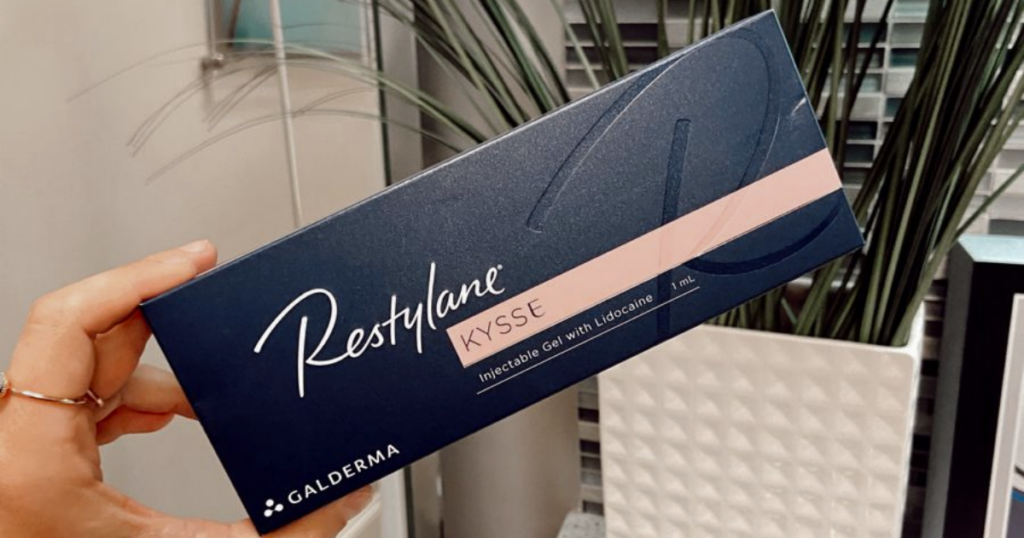
Lip filler is often one of the first treatments new injectors want to learn and for good reason. It remains one of the most requested procedures in aesthetic medicine, offering patients the opportunity to enhance volume, improve symmetry, restore age-related volume loss, and refine overall lip shape. With demand continuing to grow, many new injectors naturally view lip augmentation as an essential skill for building a successful aesthetic practice.
Understanding the key lip filler considerations is essential before ever picking up a syringe. While lip filler may appear straightforward, it is one of the most technically demanding injectable procedures performed today.
The lips are highly vascular, anatomically complex, and constantly in motion. Every patient presents with different proportions, tissue quality, aging patterns, and aesthetic goals. Small differences in product placement, injection depth, or treatment planning can dramatically influence both aesthetic outcomes and patient safety.
This is why successful lip injections begin long before the syringe ever touches the patient.
Before learning injection techniques, new injectors must first understand anatomy, tissue behavior, patient assessment, product selection, and clinical decision-making. These foundational principles allow providers to move beyond memorizing techniques and instead develop the critical thinking skills required to create safe, natural-looking outcomes.
At Aesthetic Pro Academy, we believe technical skill should always be supported by clinical reasoning. Understanding why treatment decisions are made is what transforms new injectors into confident, ethical providers capable of delivering consistently excellent patient care.
Lip Filler Is About More Than Adding Volume
One of the biggest misconceptions among beginner injectors is that lip filler is simply about making the lips larger. In reality, successful treatment involves restoring balance, preserving natural movement, and respecting each patient’s unique anatomy. Every lip tells a different story.
Some patients present with naturally thin lips that have maintained their structure over time. Others experience age-related changes, including loss of vermilion definition, decreased projection, volume depletion, or elongation of the upper lip. Previous filler treatments, scar tissue, genetics, dental support, and facial proportions all contribute to how treatment should be approached. Because of these variables, no two patients should receive the exact same treatment plan.
Experienced injectors understand that lip filler is not about following trends or recreating the same result on every patient. Instead, every treatment begins with careful assessment and individualized planning designed to complement the patient’s overall facial anatomy.
Anatomy Should Guide Every Clinical Decision
Anatomy is the foundation of every injectable treatment, but nowhere is that understanding more important than in the lips. The lips contain multiple anatomical structures that work together to create both function and aesthetics.
The orbicularis oris muscle is responsible for the dynamic movement of the mouth, while surrounding landmarks, including the vermilion border, Cupid’s bow, philtral columns, wet-to-dry junction, and oral commissures, each contribute to overall lip shape and facial harmony.
Injectors must also appreciate the complex vascular anatomy of the lips. The superior and inferior labial arteries are the main arteries of the lip. The location of these arteries can vary significantly between patients, making a thorough understanding of anatomical variation essential for reducing the risk of a vascular occlusion.
Rather than memorizing injection points, beginner injectors should learn to identify anatomical landmarks, understand tissue planes, and appreciate how underlying structures influence filler placement.
When anatomy drives treatment decisions, injectors are better equipped to produce natural-looking results while prioritizing patient safety.
Every Patient’s Tissue Behaves Differently
One concept that separates experienced injectors from beginners is an appreciation for tissue behavior.
Hyaluronic acid filler does not exist independently once injected. Instead, it integrates into living tissue that stretches, compresses, moves, heals, and remodels over time. Understanding these tissue characteristics is essential for predicting treatment outcomes. Patients with firm, youthful tissue often respond differently than patients experiencing age-related volume loss. Likewise, lips that have undergone multiple previous filler treatments may behave differently than treatment-naïve tissue.
Tissue thickness, elasticity, hydration, scar formation, previous procedures, and overall skin quality all influence how filler distributes within the lips. These factors also determine how much product the tissue can comfortably support.
One of the most common beginner mistakes is assuming that more filler creates better results. In reality, respecting tissue capacity often produces softer, more balanced outcomes while reducing the likelihood of migration, distortion, prolonged swelling, or an overfilled appearance. Excellent lip augmentation often reflects restraint as much as technical skill.
Technique Should Follow Assessment, Not the Other Way Around
As new injectors begin their education, it can be tempting to focus heavily on mastering injection techniques. Social media frequently showcases popular methods, making it easy to believe that success comes from finding the “best” technique.
In reality, there is no universal approach to lip filler. Linear threading, serial puncture, tenting, microdroplet placement, and cannula techniques all have appropriate clinical applications depending on the patient’s anatomy and treatment goals.
Rather than asking which technique is best, experienced injectors ask a different question:
Which technique is most appropriate for this patient?
That distinction is important.
Technique selection should always be guided by careful facial assessment, tissue characteristics, product selection, and desired outcomes, not personal preference or trends.
As injectors gain experience, they often combine multiple techniques within a single treatment plan to create natural, individualized results. Learning technique is important. Learning when and why to use each technique is what builds true clinical confidence.
Product Selection Is Part of the Treatment Plan
Choosing the right filler should never begin with asking, “What product do I like to use?” It should begin with understanding the patient in front of you.
Before selecting a syringe, the injector needs to assess what is actually happening within the lips and surrounding anatomy. Is there age related volume loss? Poor definition of the vermilion border? Decreased structural support? Asymmetry? A disproportion between the upper and lower lip? Or is the patient simply looking for subtle hydration and enhancement?
The injector must then consider the patient’s goals. A patient seeking soft, natural movement requires a different treatment approach than someone looking for increased projection, definition, or structural correction. The clinical findings and desired outcome should determine what the treatment needs to accomplish, and only then should product selection begin.
This is where understanding filler rheology becomes essential.
Injectors need more than familiarity with product names. They need to understand how the physical properties of hyaluronic acid fillers, including elasticity, viscosity, cohesivity, and flexibility, influence how a product behaves once placed within the tissue. These characteristics affect the amount of support a filler can provide, how easily it integrates into the lips, how it responds to movement, and ultimately, the type of result it can create.
There is no single “best” lip filler because not every patient presents with the same anatomy, tissue quality, or aesthetic goals. The right product is the one whose rheological properties best match the clinical objective identified during the assessment.
This is what separates simply injecting filler from developing a true treatment plan. The experienced injector assesses the anatomy, identifies what is happening within the tissue, understands what the patient hopes to achieve, and then uses their knowledge of rheology to select the product best suited to create that outcome.
Assess first. Define the objective. Understand the product. Then inject.
Safety Always Comes Before Aesthetics
While beautiful aesthetic outcomes are important, patient safety should always remain the highest priority. Because of the lips’ extensive vascular network, every injector performing lip augmentation must understand both complication prevention and complication recognition. Comprehensive anatomical knowledge, conservative treatment planning, slow injection techniques, continuous patient assessment, and thorough emergency preparedness all contribute to safer practice.
Equally important is recognizing when treatment should be postponed or declined altogether. Patients presenting with unrealistic expectations, significant contraindications, active infection, or requests that exceed anatomical limitations require honest clinical conversations rather than automatic treatment.
Ethical injecting means placing patient well-being ahead of aesthetic goals.
The most respected injectors are not those who say yes to every patient, they are the providers who consistently make thoughtful decisions rooted in safety, anatomy, and long-term outcomes.
Where New Injectors Should Focus First
For beginners entering aesthetic medicine, it can be tempting to jump directly into advanced lip filler techniques. However, the strongest injectors rarely begin by chasing complexity.
Instead, they focus on mastering the principles that support every successful treatment: facial anatomy, patient assessment, tissue behavior, product science, consultation skills, and ethical clinical decision-making.
Technical skill develops with repetition.
Clinical judgment develops through education.
By prioritizing foundational knowledge first, new injectors create a framework that allows every future technique to become safer, more predictable, and more effective.
That foundation ultimately builds confidence, not confidence that comes from memorizing an injection pattern, but confidence rooted in understanding why each clinical decision is being made.
Build Your Foundation with Aesthetic Pro Academy
Learning lip filler involves far more than understanding where to place product. It requires developing the clinical reasoning, anatomical knowledge, and treatment planning skills that support safe, individualized patient care.
That’s exactly why we created the Beginners Injector Bundle at Aesthetic Pro Academy.
Designed specifically for licensed medical professionals entering aesthetic medicine, the Beginner Injector Bundle combines our Botox Basics and Filler Fundamentals courses to build a comprehensive foundation in aesthetic injectables. Students develop a deep understanding of facial anatomy, patient assessment, product selection, treatment planning, safety protocols, and injection principles before advancing into clinical practice.
Already have Botox training or want to focus specifically on dermal fillers? Filler Fundamentals is also available as a standalone didactic course, providing an in-depth education on facial anatomy, filler rheology, tissue behavior, consultation techniques, and the clinical decision-making required for safe, predictable outcomes.
For providers ready to take the next step, both learning paths can be paired with The Aesthetic Residency, where students train alongside Lindsay Olyha, CRNP, inside a thriving medical aesthetics practice. This hands-on experience bridges the gap between education and real-world application, allowing students to strengthen their assessment skills, refine their technique, and build confidence under expert mentorship.
Whether you’re beginning your journey with the Beginner Injectors Bundle, expanding your knowledge through Filler Fundamentals, or building clinical confidence in The Aesthetic Residency, Aesthetic Pro Academy is here to help you develop the knowledge, skills, and confidence to succeed. Explore all of our training options through the button down below.
start Training with aesthetic pro academy
Take the Next Step


Hide