

Understanding Daxxify Dilution Techniques
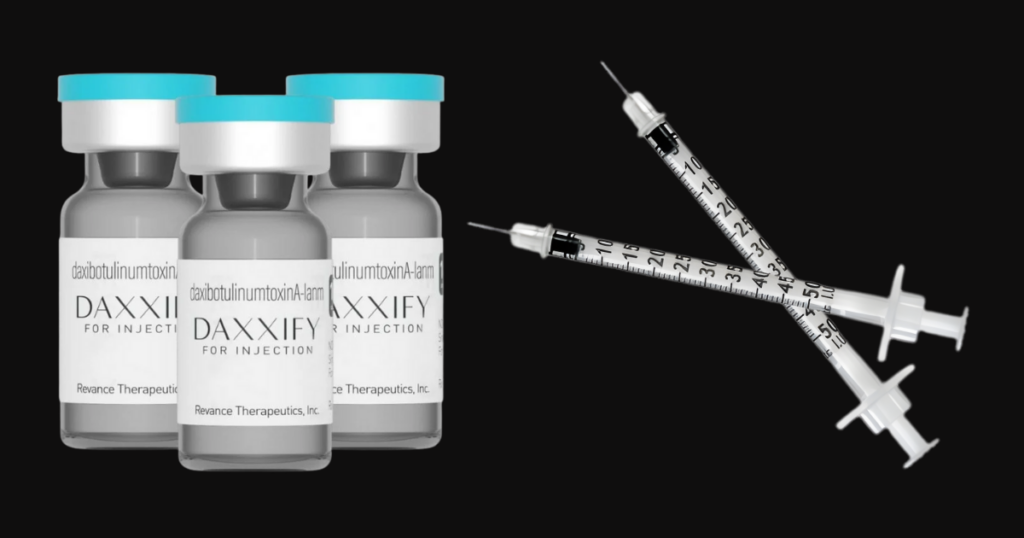
As neuromodulators continue to evolve, injectors must think critically about product behavior, dilution strategies, and tissue response. Daxxify® (daxibotulinumtoxinA-lanm), with its extended duration and peptide-based formulation, introduces both opportunity and complexity into clinical practice, prompting discussion of modified preparation approaches, collectively referred to as Daxxify dilution techniques, with the Daxxify wash technique being one commonly discussed method.
For new injectors entering aesthetic medicine, this topic matters not because it represents a required technique, but because it underscores the importance of understanding formulation science, diffusion behavior, and ethical decision-making. At Aesthetic Pro Academy, injector education does not focus on adopting every trending method, but on understanding when, why, and whether a technique belongs in clinical practice at all.
Establishing the Foundation: What the “Wash Method” Refers To
The Daxxify wash method refers to a secondary dilution step in which the injector introduces additional diluent after standard reconstitution. Rather than increasing dose, this approach alters the concentration-to-volume ratio to promote broader distribution of product across the target muscle or treatment area.
Conceptually, this method reflects principles injectors already understand dilution influences spread, surface coverage, and blending. Daxxify’s peptide-based stabilizing technology distinguishes it from human serum albumin–based neuromodulators and contributes to its prolonged duration of action. Because of this formulation, injectors must consider how dilution changes may affect onset, diffusion, and tissue interaction differently than with other toxins.
Why Dilution Strategies Require Advanced Clinical Judgment
In aesthetic medicine, dilution always matters. Increasing volume changes how the product moves through tissue planes, interacts with muscle fibers, and produces effects predictably. With Daxxify, these factors become even more important due to its longer-lasting binding profile.
Experienced injectors sometimes use wash techniques when they want to soften, blend, or modulate superficially rather than weaken a focal muscle. A more dilute solution can allow smoother transitions across broad areas or reduce abrupt demarcation lines—but only if the injector precisely understands muscle anatomy, injection depth, and diffusion vectors.
The Daxxify wash method for new injectors must recognize that adjusting dilution does not simplify treatment; it increases complexity.
Tissue Behavior, Diffusion, and Safety Implications
From a clinical standpoint, neuromodulator outcomes are dictated by three primary factors: dose, depth, and distribution. Altering dilution affects only one of these variables, but it influences the others indirectly.
A more dilute solution may spread further within the tissue, increasing the risk of unintended muscle involvement if anatomy is not thoroughly understood. This is particularly relevant in areas with overlapping muscle function, thin tissue planes, or proximity to compensatory muscles. Longer-lasting neuromodulators raise the stakes further, as unwanted effects persist longer and are not easily reversed.
Safety, therefore, is not solely about avoiding adverse events, it is about predictability. The more variables introduced into treatment, the more essential it becomes to rely on anatomical knowledge rather than technique imitation.
What New Injectors Should Prioritize First
For clinicians early in their aesthetic careers, the priority should always be mastery of standard protocols. This includes manufacturer-recommended reconstitution, consistent dosing strategies, and repetition of foundational injection patterns across a wide range of faces.
Understanding how a product behaves at baseline is a prerequisite for any modification. Without that baseline, it is impossible to assess whether a result is the product of technique, dilution, anatomy, or chance. Advanced strategies, such as wash methods should be viewed as later-stage refinements, not early learning tools.
Ethical injecting requires restraint. Not every technique belongs in every injector’s hand at every stage of training.
Clinical Decision-Making Over Trend Adoption
One of the most common challenges in injector education today is the speed at which techniques circulate online, often divorced from context or explanation. The responsibility of a medical professional is not to replicate what they see, but to ask whether a method aligns with patient safety, anatomical logic, and evidence-informed practice.
The Daxxify wash method is not inherently right or wrong. Its appropriateness depends on the injector’s experience, understanding of tissue behavior, and ability to manage risk. Education should always precede experimentation.
Advancing Your Education with Intention
Advanced dilution strategies, such as the Daxxify wash method, represent only one layer of neuromodulator education. At Aesthetic Pro Academy, these concepts are taught within a structured clinical framework that prioritizes foundational mastery before modification. Rather than encouraging early adoption of trending techniques, education is designed to help injectors understand product behavior, tissue response, and risk management at baseline, so any advanced strategy is applied with purpose, not guesswork.
Through comprehensive coursework, mentored clinical exposure, and anatomy-driven instruction, we trains injectors to think critically about every decision they make at the bedside. This approach leads to more predictable outcomes, safer treatments, and long-term professional confidence.
🎓 Aesthetic Pro Academy supports licensed medical professionals transitioning into aesthetics through layered education that combines didactic learning, hands-on experience, and real-world clinical judgment.
💡 Whether you are beginning your neuromodulator training or refining your technique, our programs emphasize the why, the how, and the safety behind every method, so you can practice with intention from day one.
Enroll with us to access expert mentorship, structured hands-on training, and a community of injectors committed to ethical, anatomy-led aesthetic medicine. Tap down below to enroll with Aesthetic Pro Academy.
start Training with aesthetic pro academy
Take the Next Step


Hide