

Hyperhidrosis: Injection Technique and Anatomy
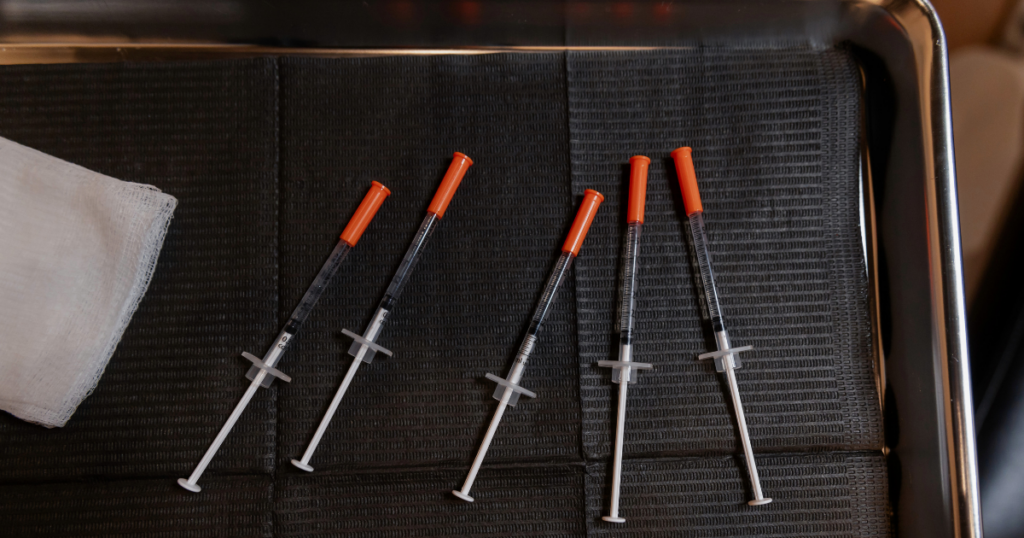
Axillary hyperhidrosis is often introduced to new injectors as a “simple” neuromodulator indication. In practice, it becomes one of the earliest and most important opportunities to understand how anatomy, physiology, and technique intersect in real time. While the axilla is considered a lower-risk treatment area, outcomes remain highly dependent on how well the injector interprets target depth, gland distribution, and diffusion within the tissue.
For new injectors, variability in results is rarely due to product failure. More often, it reflects gaps in anatomical understanding and clinical decision-making at the time of treatment. Inconsistent depth, incomplete coverage, and failure to adapt to patient-specific tissue characteristics are common early challenges. This is why hyperhidrosis injection technique and anatomy should not be approached as routine, but why mastering hyperhidrosis injection technique and anatomy is essential as a foundational training ground for building precision, consistency, and anatomical awareness.
This level of understanding begins in structured education. Within a curriculum like Botox Basics at Aesthetic Pro Academy, injectors are first introduced to neuromodulator science, mechanism of action, and anatomical layering in a way that connects directly to clinical application. Without that foundation, technique becomes memorized rather than understood, and outcomes remain unpredictable.
Hyperhidrosis as a Functional Indication
Unlike aesthetic neuromodulator treatments that target skeletal muscle, axillary hyperhidrosis is a functional indication involving the autonomic nervous system. Understanding hyperhidrosis injection technique and anatomy is essential, as eccrine sweat glands are stimulated by cholinergic signaling through the release of acetylcholine. Treatment works by interrupting this signaling at the level of the gland.
This distinction shifts the injector’s focus entirely. Rather than targeting motor end plates, the goal is precise intradermal placement within the dermis, where eccrine glands reside. If injections are placed too deeply, the product bypasses the target. If too superficial, distribution becomes inconsistent and less effective.
For new injectors, this is often the first indication where mechanism of action must be actively translated into technique. It reinforces a core principle taught early in Botox Basics. Understanding how neuromodulators work is what determines where and how they are placed.
Anatomical Considerations of the Axilla
The axilla offers a relatively controlled environment, but it is not uniform. Eccrine gland density is high, yet distribution varies between patients. The treatment area is broader than most aesthetic indications, requiring systematic coverage rather than isolated injection points.
Skin thickness, hydration, and movement all influence how injections feel and how product diffuses once placed. A strong understanding of hyperhidrosis injection technique and anatomy is important, as friction within the axilla and constant arm movement further affect distribution patterns post-treatment.
These variables require the injector to move beyond fixed patterns. While foundational training introduces grid-based mapping, true consistency comes from learning how to adapt that structure to the patient in front of you. This transition, from protocol to interpretation is where clinical growth begins, and it is refined further through hands-on experience in courses like The Aesthetic Residency, where real patient variability becomes part of the learning process.
Injection Strategy and Depth Control
Effective axillary hyperhidrosis treatment relies on consistent intradermal placement across the entire treatment area. A grid-based pattern provides structure, but outcomes depend on execution within each point.
Depth control is the most critical variable. Proper placement is confirmed by the formation of a visible wheal, indicating intradermal delivery. When this response is absent, injections are often too deep, reducing efficacy even if the pattern itself appears correct.
Spacing must also reflect an understanding of diffusion. Wider spacing can lead to untreated areas and uneven anhidrosis, while overly dense placement increases product use without improving outcomes. These decisions should be guided by how neuromodulators spread within dermal tissue, not by rigid adherence to a template.
In early training, these principles are introduced conceptually. But it is through repetition, observation, and correction, particularly in hands-on settings like The Aesthetic Residency, that injectors begin to develop the consistency required for predictable outcomes.
Tissue Behavior and Product Performance
Even in a lower-risk area, tissue behavior plays a defining role in results. Skin thickness, hydration, and vascularity all influence diffusion and uptake.
In thinner or more hydrated tissue, diffusion tends to be broader, requiring more conservative spacing. In thicker tissue, diffusion may be more limited, requiring closer intervals or slight adjustments in dosing. These are not fixed rules, but patterns that must be interpreted in real time.
This is where protocol-based learning reaches its limit. While structure is necessary early on, clinical consistency develops when injectors begin adjusting technique based on tissue response rather than repeating patterns from memory.
That shift from memorization to interpretation is a key transition point emphasized throughout continued clinical training.
Safety, Outcomes, and Clinical Responsibility
Although the axilla carries a relatively low vascular risk, safety remains closely tied to precision. Inconsistent depth reduces efficacy, while incomplete coverage leads to patchy results that often require correction.
More importantly, axillary hyperhidrosis is not purely aesthetic. Patients seek treatment for functional relief as it impacts comfort, clothing choices, and quality of life. This elevates the responsibility of the injector to deliver consistent, reliable outcomes.
Ethical practice requires restraint and discipline. Progressing too quickly into more complex indications without mastering foundational technique increases variability across all treatments. Competence is not built by expanding indications, but by refining execution.
What New Injectors Should Prioritize
Early experience with axillary hyperhidrosis should be used to build core technical skills: consistent depth control, even distribution, and the ability to recognize patterns in both successful and suboptimal outcomes.
Uneven results should not be dismissed, they are feedback. They often indicate gaps in coverage, inconsistencies in depth, or misinterpretation of tissue behavior. Learning to evaluate and adjust based on these outcomes is what defines early clinical growth.
Foundational indications like axillary hyperhidrosis are not entry-level, they’re essential. Mastery here creates the framework required for more complex treatments later.
Advancing Clinical Skill Through Structured Education
Treating axillary hyperhidrosis effectively requires more than familiarity with neuromodulators. It requires the ability to integrate anatomy, physiology, and technique into a consistent, repeatable approach.
At Aesthetic Pro Academy, this progression is intentional. Botox Basics helps to build foundational knowledge by introducing mechanism of action, anatomical layering, and injection strategy in a way that builds clinical reasoning from the start. From there, The Aesthetic Residency bridges the gap between knowledge and application, offering exposure to real patients, tissue variability, and guided mentorship in a clinical setting.
Together, these experiences reflect the reality of aesthetic medicine: technical skill alone is not enough. Consistency comes from understanding how to think through each treatment, not just how to perform it.
For injectors looking to build a stronger, more reliable clinical foundation, continued, structured education is the next step. Explore upcoming trainings and begin developing a more anatomy-driven approach to injecting at Aesthetic Pro Academy. Tap down below to get started.
start Training with aesthetic pro academy
Take the Next Step


Hide