

Platysmal Bands Botox Treatment for New Injectors
The neck is one of the earliest regions to reveal signs of aging, yet it is often underestimated in aesthetic practice. Visible vertical platysmal bands, loss of jawline definition, and laxity in the anterior neck can dramatically influence a patient’s overall appearance. Platysmal bands botox treatment for new injectors requires more than technical skill with a syringe; it demands a thorough understanding of anatomy, tissue behavior, and the relationship between dynamic muscle activity and structural support. Misjudging muscle function or tissue response in this region can lead to compromised neck movement, an unnatural appearance, or patient dissatisfaction, making it essential to approach platysmal treatment with caution and precision.
At Aesthetic Pro Academy, we emphasize that neck rejuvenation is fundamentally a clinical decision-making process. Learning to evaluate the platysma, assess its influence on dynamic lines, and integrate these observations into a patient-specific treatment plan is a critical skill for any injector striving for predictable, natural results. Understanding anatomy and tissue behavior before choosing injection techniques or doses is essential not only for safety but also for long-term aesthetic harmony.
For new injectors, Botox Basics provides the foundational training needed to approach areas like the neck safely. This beginner-friendly, self-paced course covers facial anatomy, neuromuscular function, injection techniques, dosing strategies, and safety considerations. Learners gain structured instruction on muscle assessment, target injection sites including both common and off-label areas and the management of complications. The course combines online modules, video demonstrations, downloadable treatment templates, and optional hands-on practice, giving new injectors a structured environment to translate anatomical knowledge into practical skill. This makes it an ideal first step for anyone looking to confidently and safely inject the lower face and neck.
Anatomy and Function of the Platysma
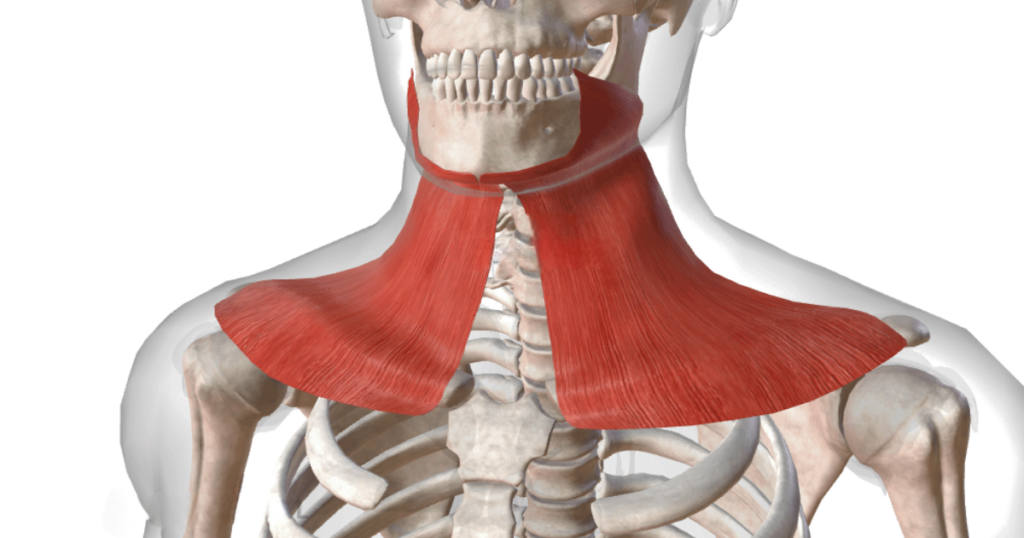
The platysma is a thin, superficial muscle that spans the anterior neck, extending from the mandible and jawline down to the clavicle and upper chest. Its fibers run predominantly vertically, with medial interdigitation at the midline and lateral blending with muscles of the lower face. Functionally, it contributes to expressions such as grimacing and subtle tension of the lower jaw and mouth. Understanding platysmal bands botox treatment for new injectors begins with recognizing that repeated contraction over time creates the vertical cords known as platysmal bands. These bands are dynamic; their appearance depends on both muscle activity and the support of overlying skin and subcutaneous tissue.
The platysma does not act in isolation. Its fibers interact with neighboring muscles, influencing jawline definition and the cervicomental angle. Recognizing these interactions is critical when planning neuromodulator interventions, as improper dosing or placement can disrupt natural movement or compromise function. Courses like Botox Basics focus on these anatomical relationships, guiding learners through practical exercises, video demonstrations, and case studies to build confidence before treating patients.
Causes of Platysmal Banding and Age-Related Changes
Platysmal banding arises primarily from repetitive vertical contraction. In some patients, hyperactivity of the platysma may accentuate bands even at a younger age. With advancing age, tissue changes such as reduced skin elasticity, fat loss, and connective tissue weakening make these bands more pronounced and can worsen jawline sagging.
For new injectors, understanding these etiologies is critical for safe treatment planning. Observing muscle activity at rest and during animation allows clinicians to distinguish hyperactive bands from those accentuated by tissue laxity, informing dosing, injection placement, and staging.
Neuromodulator Principles for Platysmal Bands
Injecting neuromodulators into the platysma requires anatomical precision, conservative dosing, and staged planning. The goal is to soften vertical bands while preserving natural neck and lower facial movement. Placement must avoid the midline and critical structures such as the thyroid and cervical vasculature, while lateral injections address the most prominent fibers. Often, multiple sessions are necessary to achieve gradual improvement and monitor tissue response, reinforcing that staged treatment maximizes both safety and predictability.
Understanding tissue behavior is equally critical. Thinner patients require smaller units to avoid overcorrection, while thicker, more fibrous fibers may tolerate slightly higher dosing distributed across multiple points.
For injectors ready to apply these skills in real-world settings, the Aesthetic Residency offers supervised hands-on experience, including opportunities to inject the lower face and platysmal bands. Residency participants practice patient consultations, treatment planning, and neuromodulator administration under expert mentorship, bridging the gap between theory and clinical confidence. This combination of foundational knowledge from Botox Basics and hands-on training in the Aesthetic Residency equips new injectors to approach the neck with both competence and caution.
Integrating Safety, Ethics, and Clinical Decision-Making
Ethical and safe practice in neck rejuvenation goes beyond technical proficiency. New injectors must develop the judgment to determine when treatment is appropriate, when to defer, and when to stage interventions. Prior surgery, thyroid concerns, comorbidities, or atypical anatomy may require modifications. Patient safety and functional preservation must always take precedence over aesthetic ambition.
Structured assessment of dynamic movement, tissue response, and patient-specific anatomy should guide every decision. Focusing on evaluation and planning before dosing cultivates critical thinking, reduces errors, and ensures interventions complement rather than overpower natural anatomy. The resources provided in Botox Basics, including treatment planning templates, informed consent forms, and pre/post care instructions, reinforce this safety-first mindset.
Prioritization and Technique Guidance for New Injectors
For clinicians early in training, the most important priority is learning to read the neck dynamically. Observe how bands form during animation, palpate the fibers, and correlate visible lines with underlying muscle activity. Begin with conservative dosing and precise placement, emphasizing subtle improvement. Recognize when tissue laxity, fat loss, or skeletal support may require staged treatments, and defer more aggressive interventions until clinical competence is established.
As a new injector, combining didactic knowledge gained in Botox Basics with practical application in the Aesthetic Residency allows new injectors to develop structured assessment skills, understand tissue behavior, and safely execute lower-face injections, including platysmal bands, under guided supervision. This dual approach ensures injectors build both knowledge and clinical judgment before working independently.
Closing Thoughts: Advancing Your Clinical Expertise
Mastery of platysmal band management exemplifies the intersection of anatomy, tissue behavior, and ethical clinical decision-making. Platysmal bands botox treatment for new injectors requires structured assessment, conservative and precise technique, and an understanding of how aging and dynamic movement interact in the neck. Developing these skills early builds confidence, supports patient safety, and establishes the foundation for individualized, thoughtful treatment plans.
Aesthetic Pro Academy provides a structured, evidence-based pathway for new and licensed injectors to refine their approach to dynamic facial and neck anatomy. Botox Basics offers foundational education, while the Aesthetic Residency provides hands-on mentorship to translate theory into clinical practice. Together, they represent the most effective training pathway for injectors seeking mastery in complex areas like platysmal band management.
If you are ready to deepen your understanding of neck anatomy, refine your technique, and strengthen your clinical judgment, tap below to enroll at Aesthetic Pro Academy.
start Training with aesthetic pro academy
Take the Next Step


Hide